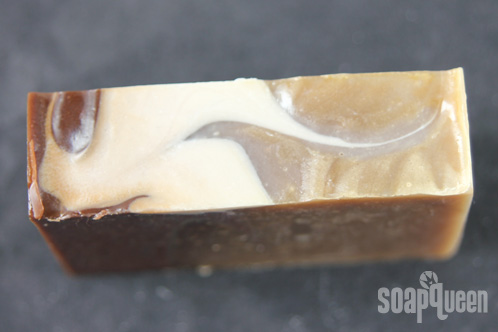
With so many variables in soaping — from the oils you use, to the temperature you soap at to the fragrance oils you use — there are an infinite number of factors that can make a difference in your final product. Today I wanted to focus on something that we have all experienced that is a direct result of variations in your soaping recipe — soda ash. Learn more about how to prevent it and what you can do if it shows up on your soaps!
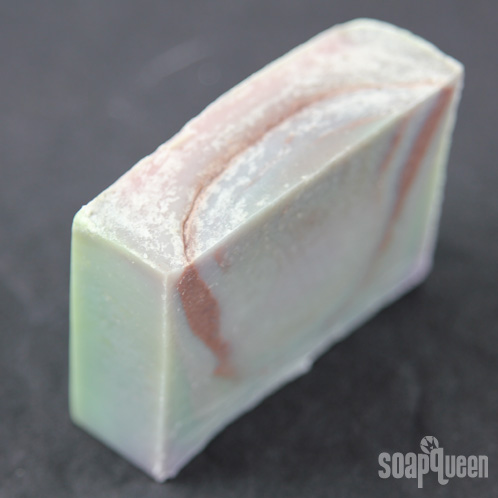
Soda ash forms when unsaponified lye reacts with naturally occurring carbon dioxide in the air. Soda ash is a harmless, and it’s most common on the surface of your cold process soaps, but sometimes soda ash can form throughout the middle of the bars. It won’t damage your soaps, but if you have a detailed swirl or design, it may end up obscuring it. The easiest way to prevent soda ash it to spray the entire top of your recipe with 99%
Isopropyl Alcohol 10 – 15 minutes after pouring the soap. Then, cover the mold with a piece of cardboard and insulate for up to 24 hours. Unmold after 3-4 days and you might find the amount of soda ash to be drastically reduced compared to not spraying and insulating (with some recipes however, no amount of alcohol or insulating will prevent
all soda ash. These are simply preventive measures!).
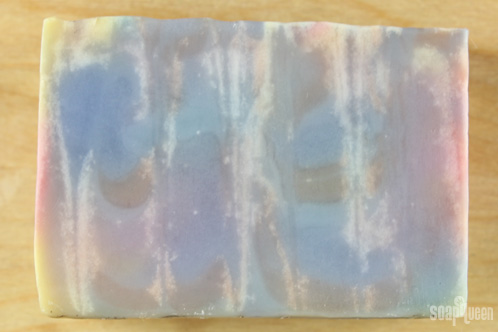
Temperature can also play a factor in soda ash formation. If you soap too cold and too thin (if your lye and oils are less than 100 degrees F), you may find soda ash will form deep within the soap, not just on the surface. Typically, this is more common in soaps with intricate swirls that were soaped cool and thin. If you tend to soap at cooler temperatures, achieve a thicker trace before pouring to lessen soda ash formation.
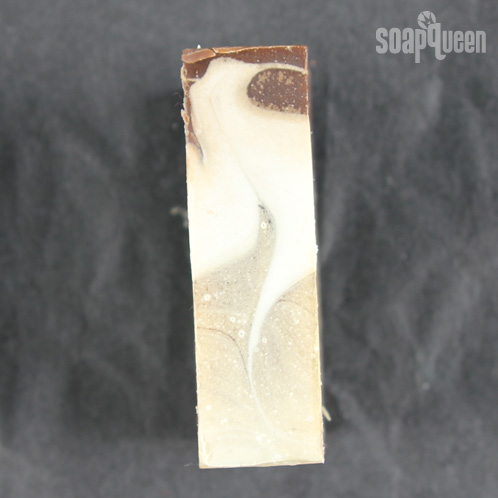
This is an example of deep soda ash. In this case, veins of ash run the entire depth of the soap! This is a good example of soap that was poured cold and thin.
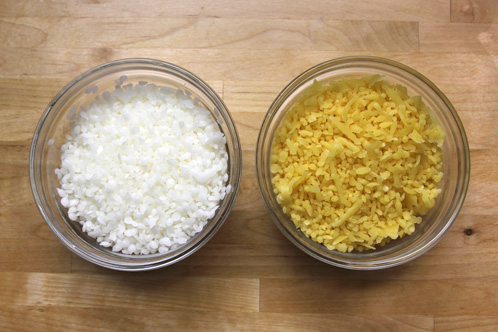
As an extra safeguard against soda ash, you can also decrease the water amount in your recipe by 10%, work at a lower superfat level, work at a thicker trace or even include .5% melted
beeswax at thin trace to help decrease soda ash. Some soapers don’t mind the soda ash, but if you’re like me, you want your bars to be as shiny and clean as possible.
Adding .5% melted beeswax at thin trace can help decrease soda ash. Bramble Berry carries both white and yellow beeswax. The wax helps to add another barrier between the unsaponified lye and the air, effectively slowing the formation of ash.
Three ways to clean soda ash
If you do end up with soda ash on your soaps (and if you make enough batches of cold process, you inevitably will!), have no fear. We’ve got three easy ways to quickly and easily clean your bars.
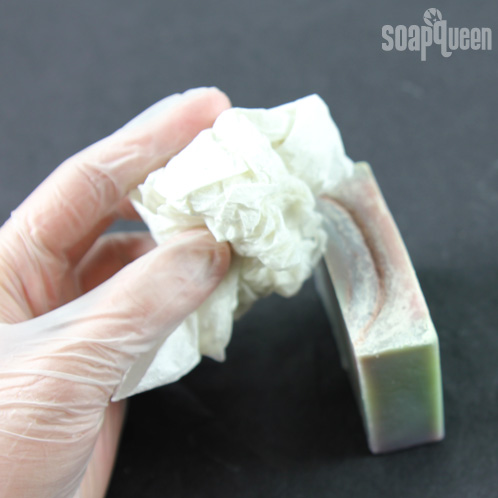
1. The first (and easiest) way to clean your soaps is with a simple cold water wash. Make sure you are wearing gloves in order to prevent any pesky fingerprints from showing up on your soap. Grab a paper towel and run your soap under cold running water and scrub the areas that have soda ash. As soon as the soda ash is gone, rinse away any lather and allow to dry on a rack
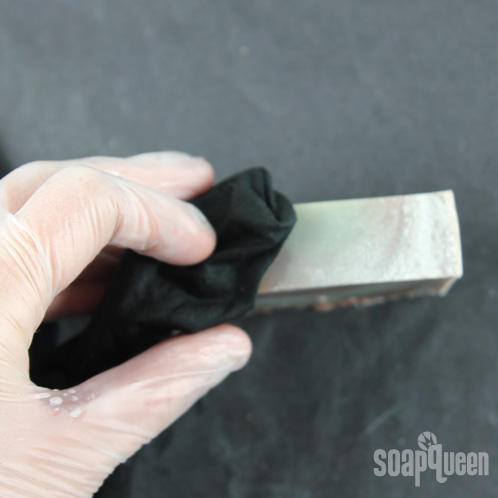
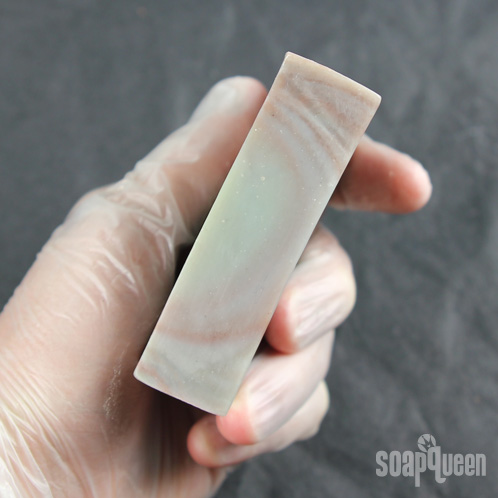
2. The most successful (and economical) way I’ve found to clean my cold process soaps in a pinch is to use old nylons to gently scrub away the ash. Once you’ve gotten a run or two and you can’t wear them any longer, cut the foot off the end of the nylons and use it in the same way you would the paper towel. This method tends to work best for me, and I don’t have to waste any paper towels. Best of all, you can use the nylon over and over again — just be sure to wash it out by hand between scrubs.
These simple techniques can drastically improve the look of your soaps, and customers are much more likely to purchase soaps that are clean and shiny with well-defined colors.
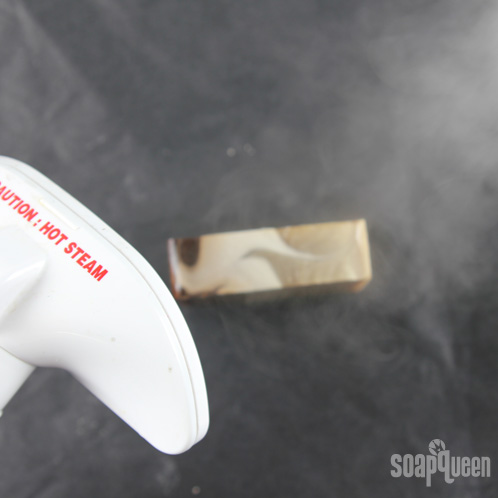
3. If you are a big batch soaper, I would suggest investing in a handheld steamer. This will reduce the soda ash on your soaps and will be invaluable in saving time in the long run. Just set your soaps on a rack and hold the steamer about 5 inches above each bar for about 20-30 seconds. The soap you see below is actually the
Oatmeal Milk and Honey Mantra Swirl that happened to get a bit of soda ash on it. Taking that extra time to clean up the soda ash on your bars can really make all the difference.
By the time you are done steaming, you’ll have clean, shiny bars. Steamed bars reveal the soap’s design and bring out the colors, making it more appealing to shoppers. If you have your own strategies for getting rid of soda ash, we would love to hear what method works the best for you. Leave a comment below letting us know how you prevent soda ash!