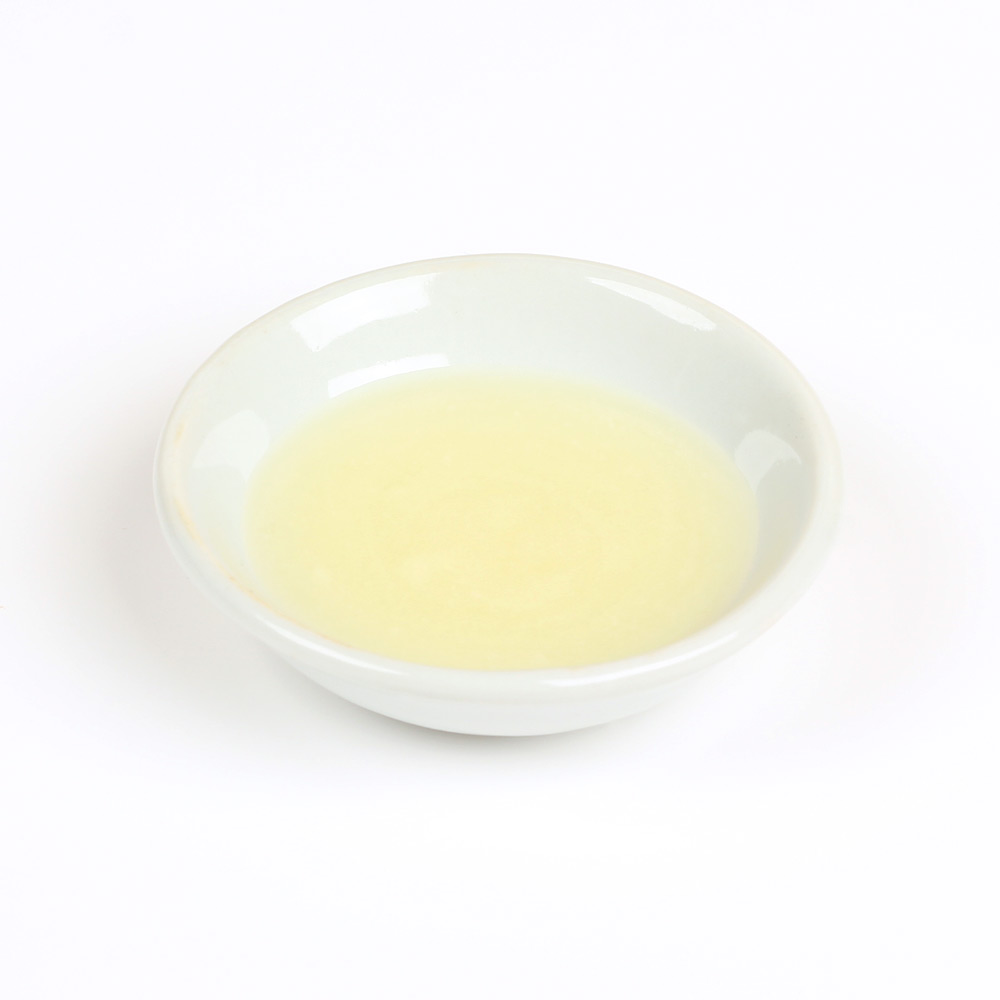
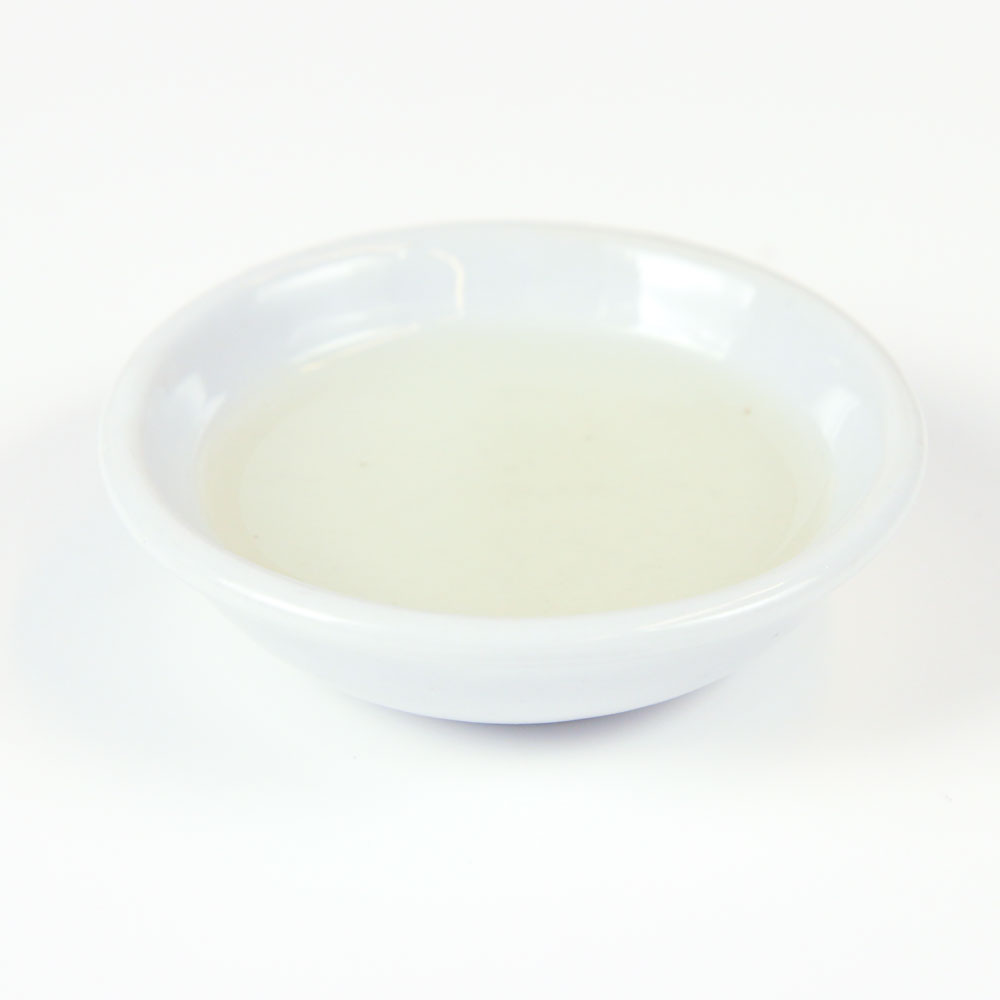
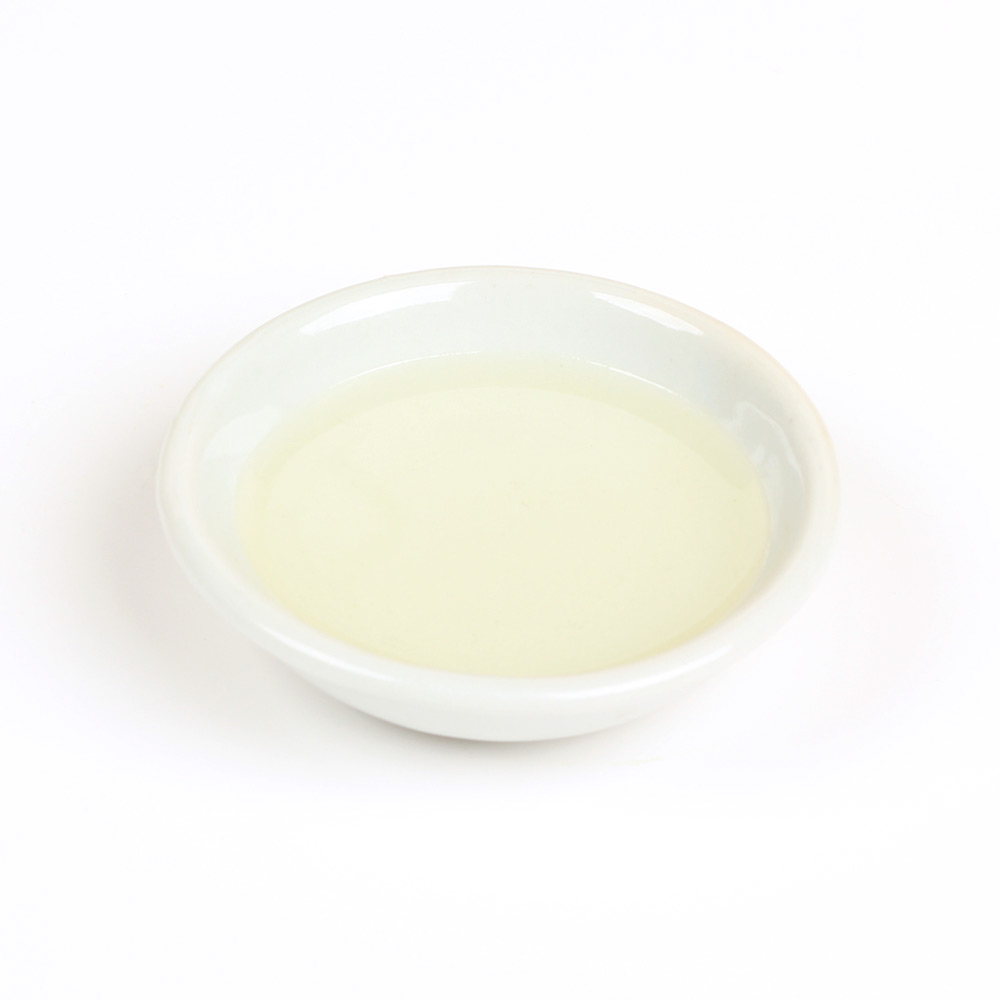
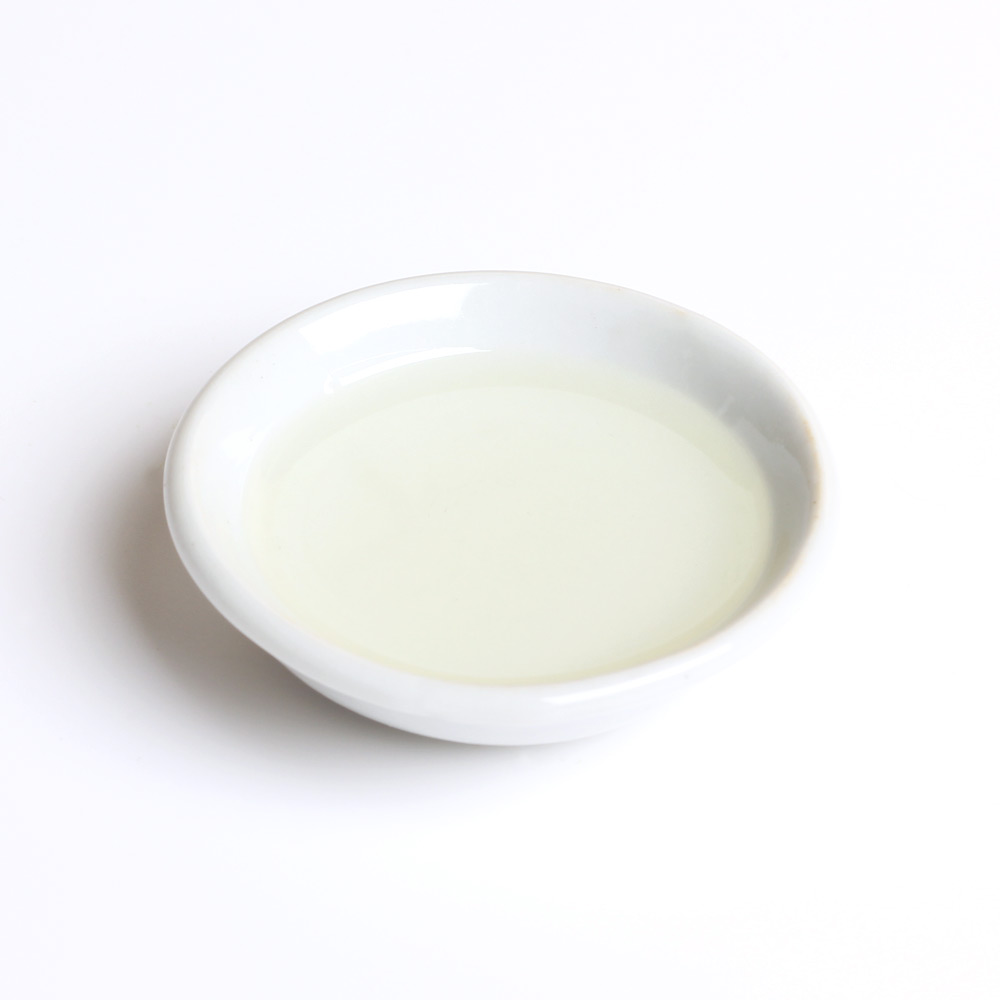
- This soap bar was surprisingly easy to unmold from the acrylic mold, don't know why yet, just slipped out without any effort.
- 2.3g sodium lactate (can omit)
- Green clay oil, yellow clay oil, pearl clay oil as colorants
- Lavender and cedarwood essential oils total 11g
- 95% alcohol spay on finished top. Loosely covered with plastic wrap
2018年4月29日 星期日
酪梨米糠保濕皂 Moisturizing Avocado Soap
甜杏仁三重滋潤皂 Almond and Butters Soap
Aloe Vera Facial Soap (The Nerdy Farm Wife)
The following post is from https://thenerdyfarmwife.com/fresh-aloe-vera-soap-recipe/
{How to Make Fresh Aloe Vera Soap + Aloe Vera Facial Soap Recipe}
How to extract fresh aloe for soapmaking
- Cut the aloe leaf into several sections.
- Use a sharp knife to run along the inside edges of each section, separating the inner gel from the outer skin.
- Use your fingers or a spoon and press the aloe gel from the leaf.
- Place in a small food processor or blender.
- Process until smooth. (It will get fluffy, almost like egg whites.)
- Store in the refrigerator if you’ll be making soap within a few days, or freeze in ice trays for longer storage.
Ingredients for aloe vera soap
- 2.5 oz (71 g) distilled water
- 1.92 oz (55 g) lye (sodium hydroxide) – 6% superfat
- 2 oz (57 g) fresh aloe gel
- 6 oz (170 g) olive oil
- 3 oz (85 g) coconut oil*
- 2 oz (57 g) sunflower (or sweet almond or apricot kernel)
- 2 oz (57 g) tallow (or shea, mango or cocoa butter)
- 1 oz (28 g) castor oil
洋蔥麵包捲
- 高粉:200g
- 奶粉:4g
- 酵母粉:2g
- 棕梠糖:15g
- 松露鹽:1t
- 綜合香料:適量
- 冰水:135g
- 松露橄欖油:15ml
- Trader Joe's:Bagel Sesame 加入麵糰一起攪拌。
- 炒洋蔥(調味):1/2 顆
- 第一次發酵完成後,鬆弛15分鐘,桿平,鋪上材料 10,捲起,放入圓模,第二次發酵約45 分鐘。
Miele 6260 層一,加濕一次,210 度C,5 分鐘,200 度,16 分鐘
Baby's Breath Soap (Soap Queen)
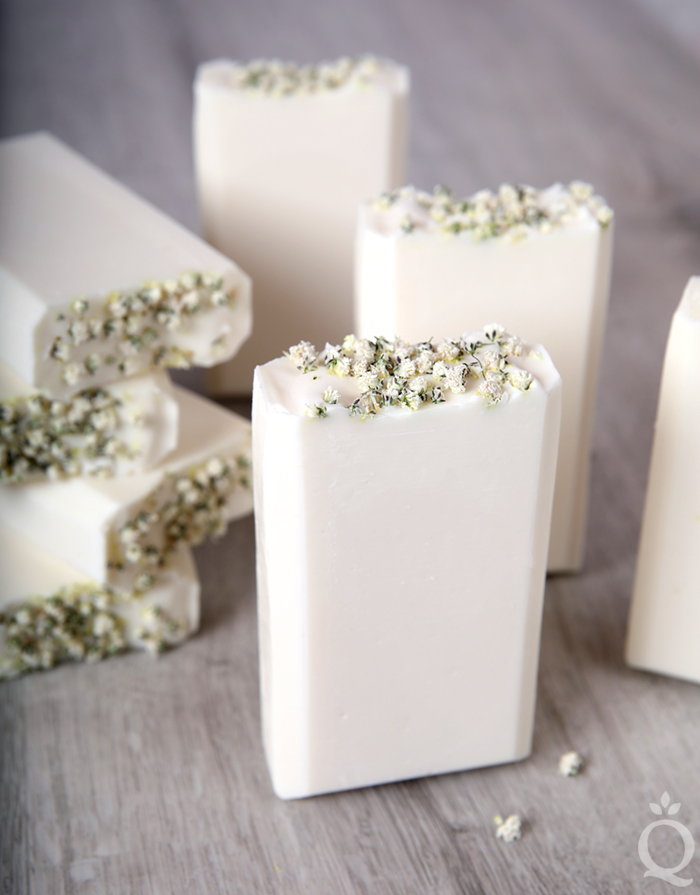
This soap looks nice. The following post is from: {Baby's Breath Soap}
Another information is about elderberry: {接骨木花茶}

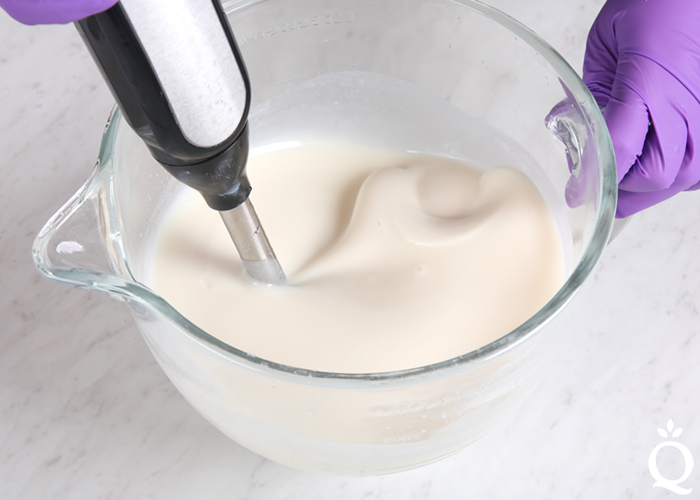
FOUR: Once the lye water and the oils have cooled to about 100-110 degrees F, add the lye water to the oils and stick blend until a thin trace.

FIVE: Add the 2.5 ounces of Baby’s Breath Fragrance Oil, and use the stick blender to mix in. Continue blending until you reach a medium trace.
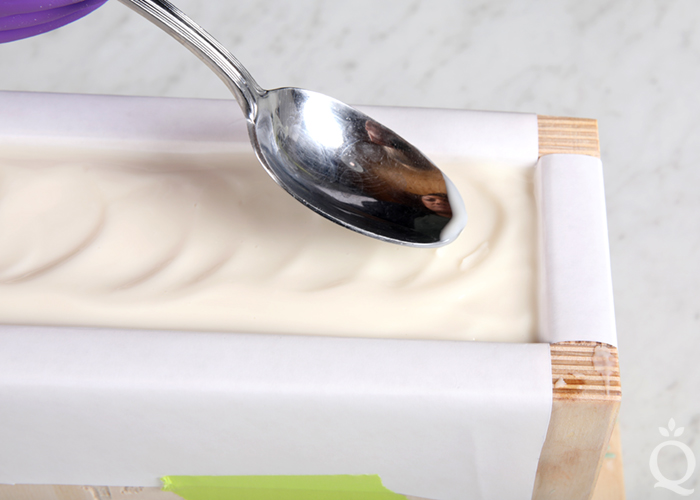
SIX: Pour all of the soap batter into the mold. Firmly tap it on the counter to help get rid of bubbles. Use a spoon to manipulate the top and add a very light texture.

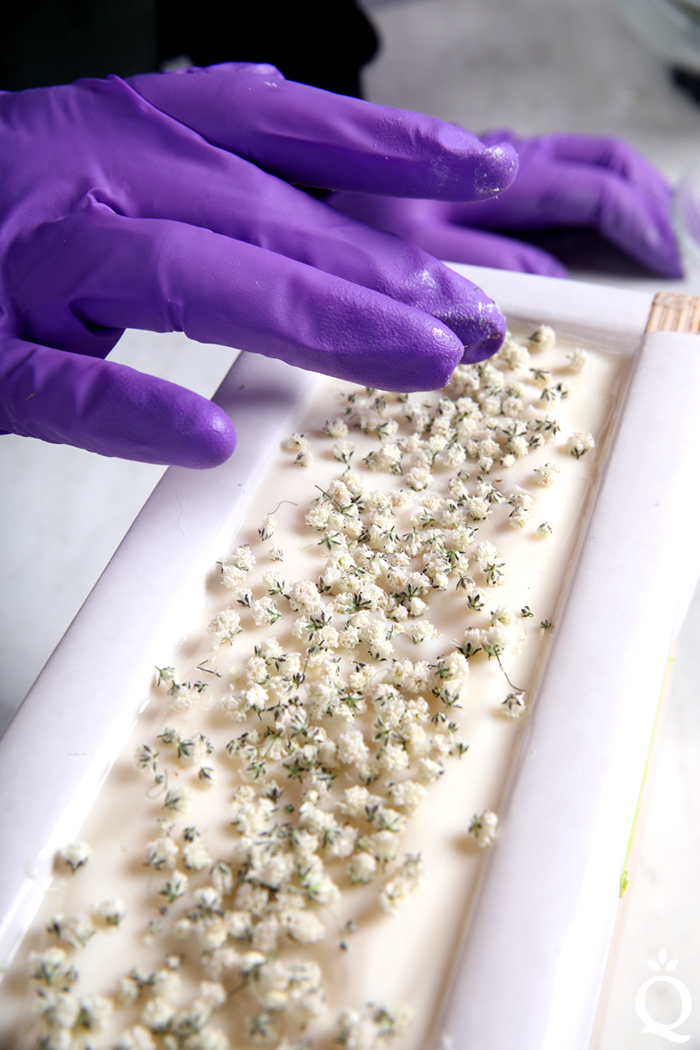
SEVEN: Sprinkle dried baby’s breath flowers on top of the soap, concentrating them toward the center. Use a little more than you’d like, as some may fall off during the cutting process. Use gloved fingers to gently press the flowers into the soap to help them stick better.

EIGHT: Spritz the top of the soap with 99% isopropyl alcohol to help prevent soda ash. To prevent cracking and glycerin rivers, place the soap in the freezer for 24 hours. Allow the soap to fully thaw and harden for another 2-3 days.
Another information is about elderberry: {接骨木花茶}
Baby’s Breath Soap Tutorial
Filed Under: Bath & Body Tutorials, Cold Process Soap 44 Comments

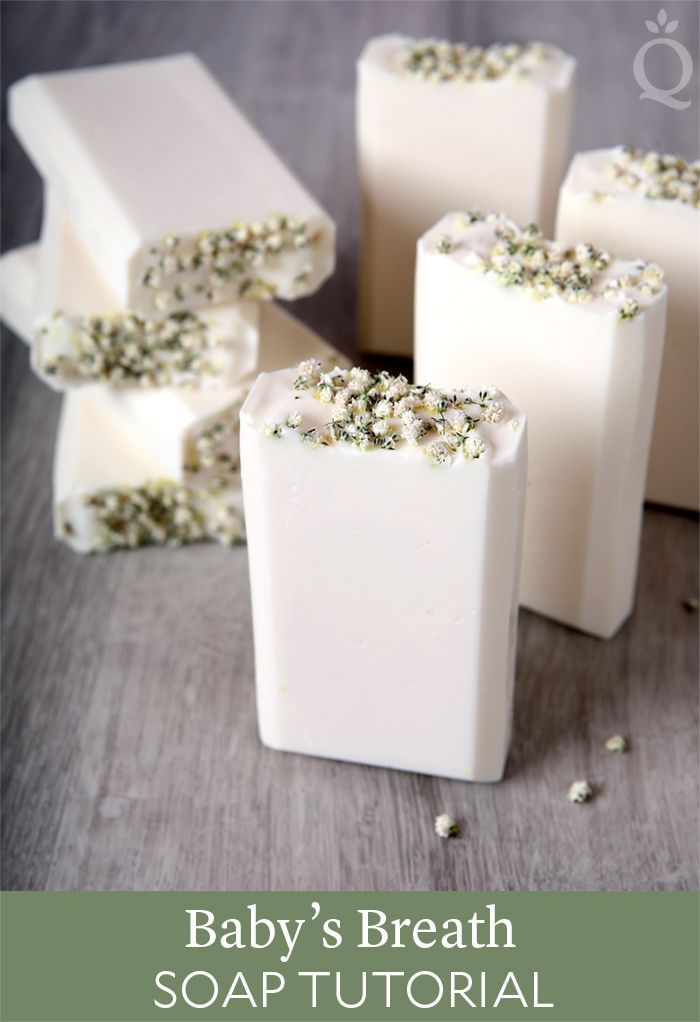
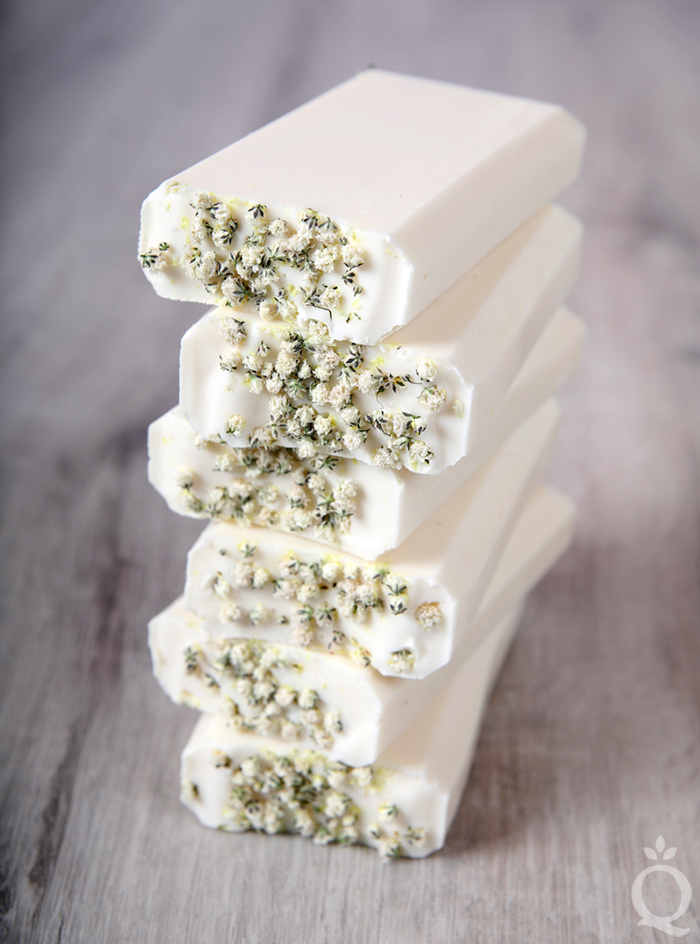
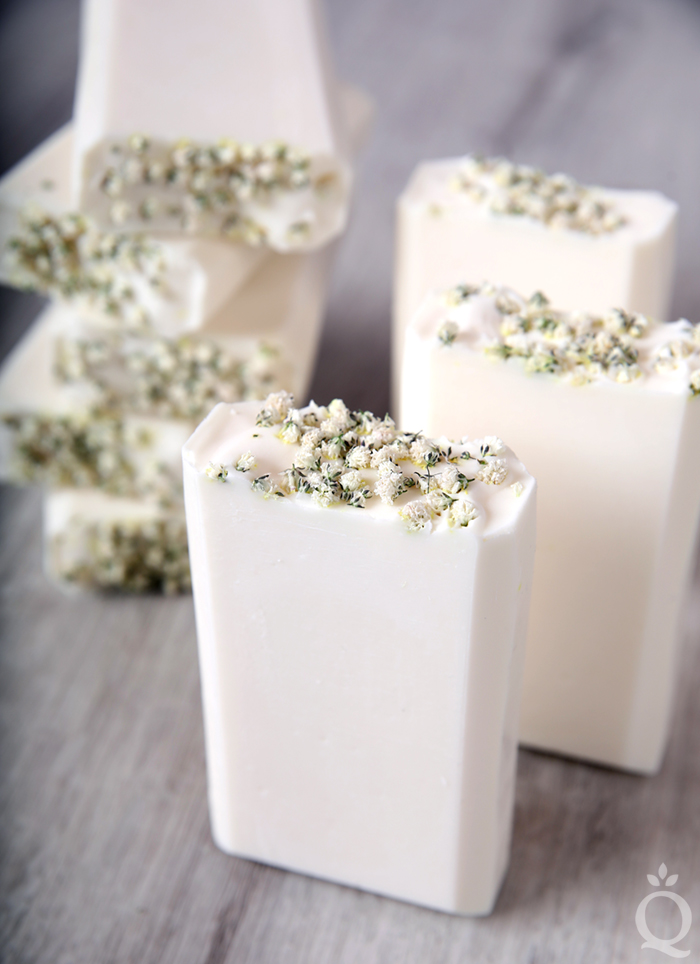
Baby’s breath flowers are a delicate addition to any bouquet. They usually play second fiddle to larger flowers, but for this soap we let baby’s breath take center stage. We kept the design extremely simple – the entire batch is colored white and dried baby’s breath flowers are placed on top.
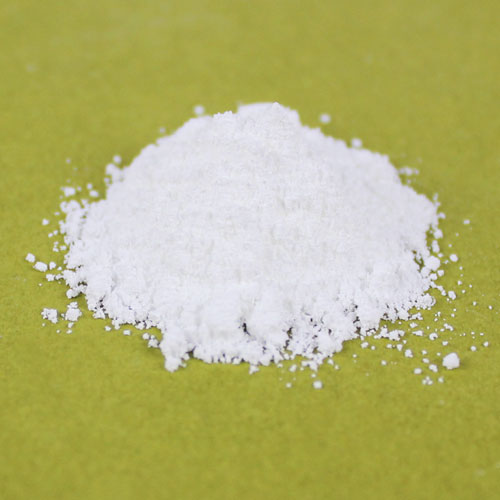
To get the bright white shade, we used only light-colored oils. We also added plenty of titanium dioxide, which does pose a few obstacles. Using a large amount of titanium dioxide can lead to glycerin rivers. They can be prevented by using a water discount, so this recipe is discounted by 15%.

Titanium dioxide is similar to clay in soap – it tends to dry it out. The wood mold also insulates the soap, causing it to become quite warm. We found the combination of titanium dioxide, heat, and a water discount led to cracking. After tweaking the recipe a few times, we found an amount of titanium dioxide that led to extremely white bars without cracking. The key was soaping with slightly cooler temperatures (100-110 ° F) and placing the soap in the freezer for 24 hours.

The soap is made with Baby’s Breath Fragrance Oil, which is a soft and delicate scent that doesn’t discolor. The Baby’s Breath Fragrance Oil is part of our Modern Floral Collection, which includes four new scents, extracts, dried botanicals, and more. Click here to see all the new products.

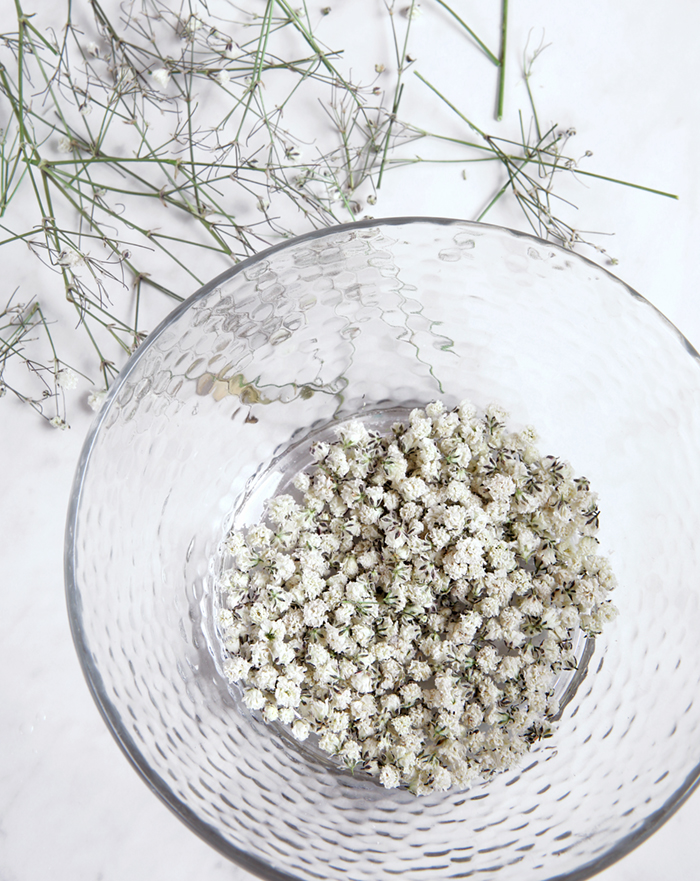
The baby’s breath flowers used on top were purchased fresh and allowed to dry for several weeks. We picked off the flowers to sprinkle on top prior to soaping. Interestingly, we found that the flowers bled a yellow hue onto the soap.
Baby’s Breath Soap Tutorial
What You Need:
Tall Narrow Wood Loaf Mold
6.8 oz. Canola Oil (17%)
1.2 oz. Castor Oil (3%)
10 oz. Coconut Oil (25%)
8 oz. Palm Oil (20%)
6 oz. Shea Oil (15%)
8 oz. Sweet Almond Oil (20%)
5.6 oz. Sodium Hydroxide Lye
11.2 oz. Distilled Water (15% water discount)
2.5 oz. Baby’s Breath Fragrance Oil
2 tsp. Titanium Dioxide
Dried Baby’s Breath Flowers
Tall Narrow Wood Loaf Mold
6.8 oz. Canola Oil (17%)
1.2 oz. Castor Oil (3%)
10 oz. Coconut Oil (25%)
8 oz. Palm Oil (20%)
6 oz. Shea Oil (15%)
8 oz. Sweet Almond Oil (20%)
5.6 oz. Sodium Hydroxide Lye
11.2 oz. Distilled Water (15% water discount)
2.5 oz. Baby’s Breath Fragrance Oil
2 tsp. Titanium Dioxide
Dried Baby’s Breath Flowers
Click below to add everything you need for this project to your Bramble Berry shopping cart!Find the supplies you need for this project below
If you’ve never made cold process soap before, stop here. We highly recommend checking out our FREE four part SoapQueen.tv series on cold process soapmaking, especially the episode on lye safety. And if you’d rather do some reading, Bramble Berry carries a wide range of books on the topic, including Pure Soapmaking. You can also check out the digital downloads for that instant gratification factor.
FRAGRANCE PREP: Measure 2.5 ounces of Baby’s Breath Fragrance Oil into a small glass container and set aside.
MOLD PREP: Line the Tall Narrow Wood Loaf Mold with freezer paper with the shiny side up. For tips on how to line the mold, click here.
SAFETY FIRST: Suit up for safe handling practices. That means goggles, gloves, and long sleeves. Make sure kids, pets, other distractions, and tripping hazards are out of the house or don’t have access to your soaping space. Always soap in a well-ventilated area.
ONE: Slowly and carefully add 5.6 ounces of lye to 11.2 ounces of water and gently stir until the lye has fully dissolved and the liquid is clear. Set aside to cool. If you’d like a harder bar of soap that releases faster from the mold, you can add sodium lactate to the cooled lye water. Use 1 teaspoon of sodium lactate per pound of oils in the recipe. For this recipe, you’d add 2.5 teaspoons sodium lactate.
TWO: In a large glass bowl, combine and melt the 10 ounces of coconut oil, 6.8 ounces of canola oil, 1.2 ounces of castor oil, 6 ounces of shea oil, 8 ounces of sweet almond oil, and 8 ounces of palm oil (remember to fully melt then mix your entire container of palm oil before portioning).
THREE: Add 2 teaspoons of titanium dioxide to the oils and use a stick blender to fully combine until there are no chunks.
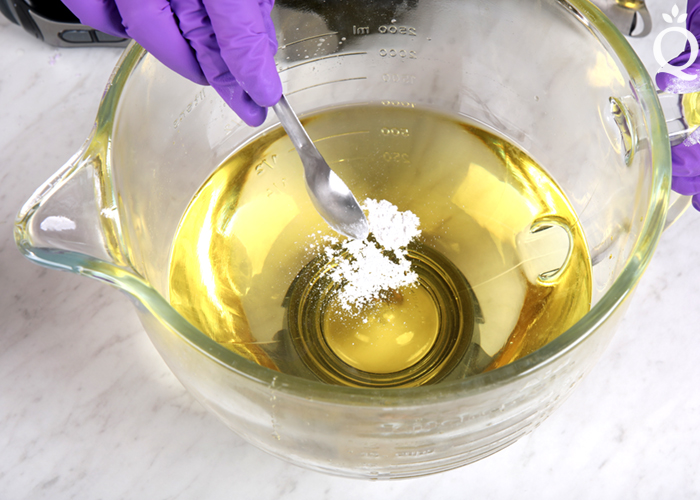
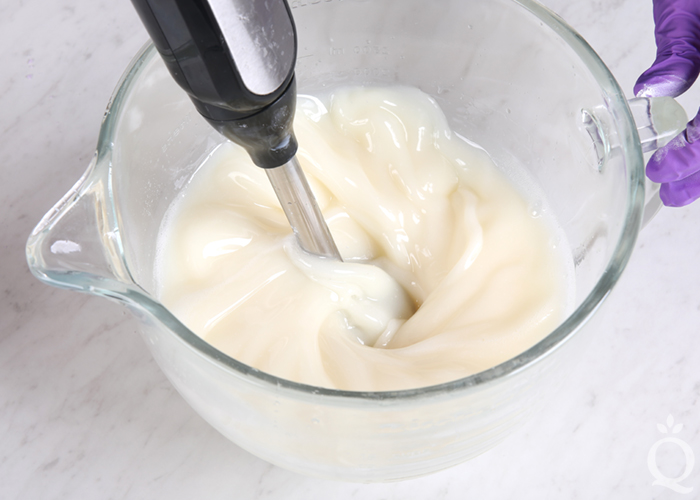
FOUR: Once the lye water and the oils have cooled to about 100-110 degrees F, add the lye water to the oils and stick blend until a thin trace.
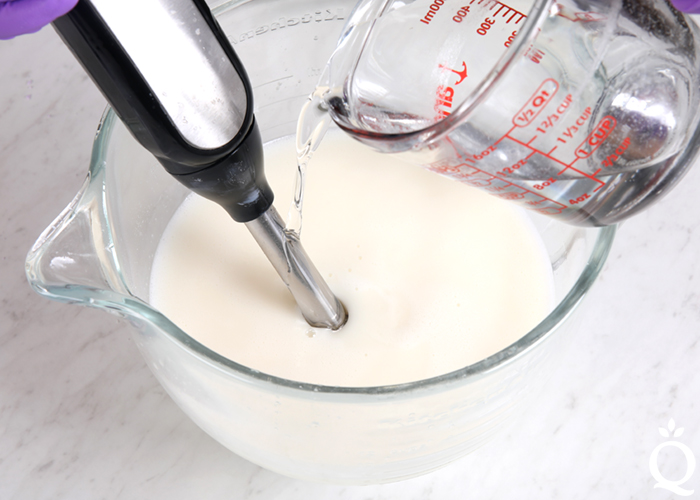
FIVE: Add the 2.5 ounces of Baby’s Breath Fragrance Oil, and use the stick blender to mix in. Continue blending until you reach a medium trace.
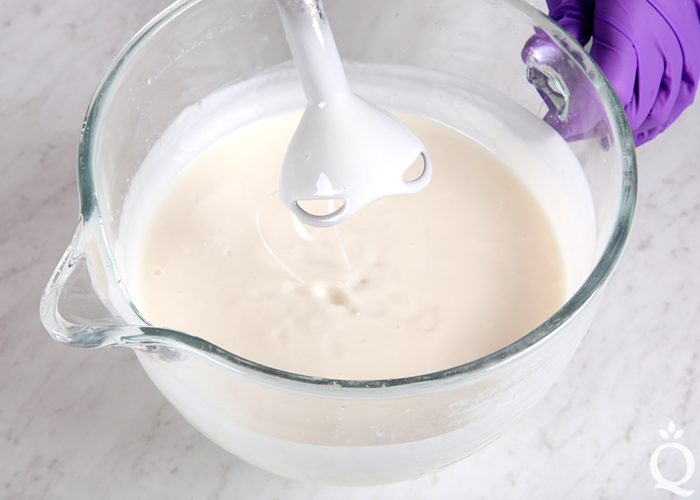
SIX: Pour all of the soap batter into the mold. Firmly tap it on the counter to help get rid of bubbles. Use a spoon to manipulate the top and add a very light texture.
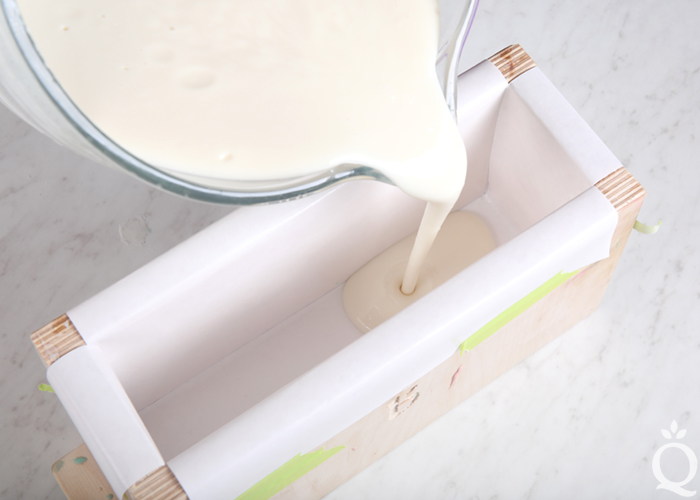
SEVEN: Sprinkle dried baby’s breath flowers on top of the soap, concentrating them toward the center. Use a little more than you’d like, as some may fall off during the cutting process. Use gloved fingers to gently press the flowers into the soap to help them stick better.
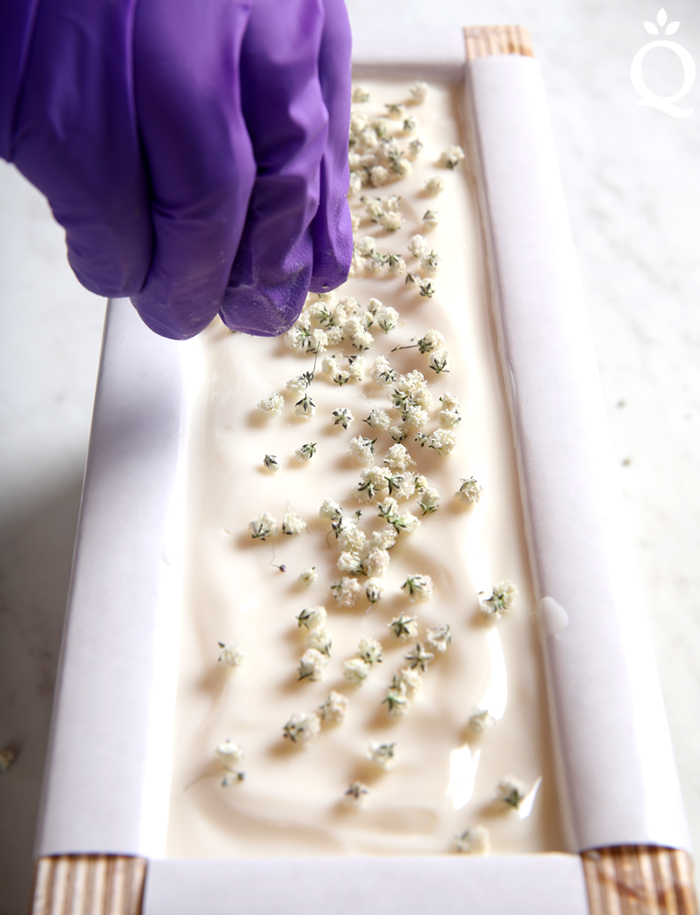
EIGHT: Spritz the top of the soap with 99% isopropyl alcohol to help prevent soda ash. To prevent cracking and glycerin rivers, place the soap in the freezer for 24 hours. Allow the soap to fully thaw and harden for another 2-3 days.
To remove, slide out the bottom piece of the mold and gently push the soap down and out. You can also grab the freezer paper and lift it up and out. Peel away the paper and cut the soap into bars. To avoid drag marks, lay the soap on its side and cut. Allow the bars to harden and cure for 4-6 weeks. Enjoy.

2018年4月28日 星期六
Soap Crack (Soap Queen)
The following information is from {Soap Queen}:
{Why Did My Soap Crack?}
Lots of firm butters like cocoa butter can cause soap to crack. I recommend using no more than 15% butter in your recipe to prevent this.
Lye heavy soap can be brittle and may crack. Learn how to test the pH of your soap here.
Adding honey to cold process soap can cause an extreme gel phase, which can lead to the soap cracking.
To prevent clays from drying out your soap, disperse them in distilled water. Above, dispersed French green clay is added to soap batter in the Avocado + Spearmint Cold Process Tutorial.
{Why Did My Soap Crack?}
Why Did My Soap Crack?
Filed Under: Tips & Tricks 64 Comments

You poured your soap into the mold and everything looks wonderful. But, when you look at the soap the next day…ack! There’s a huge crack down the center. What happened? There are several reasons why your batch may have cracked. Below are some of the most common cracking culprits, and how to avoid them.
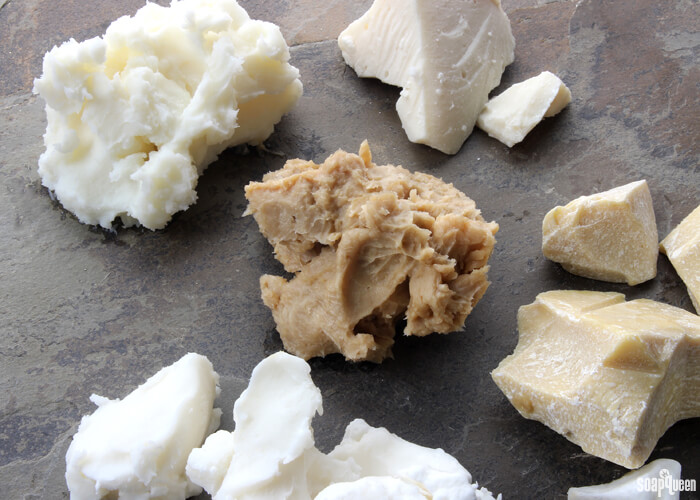
Too Much Hard Oils, Butters, WaxOne reason why a batch of soap might crack is because of the recipe. Soap is more likely to crack if it contains a large amount of solid oils, butters or wax. The potential for cracking is greater with more brittle butters and waxes, such as cocoa butter and beeswax. In general, I recommend limiting the amount of butters to 15% of your total oils, and the amount of beeswax to 8% or less of the total oils. This post has more information about various butters and how to use them in your soap and other beauty products.
Lots of firm butters like cocoa butter can cause soap to crack. I recommend using no more than 15% butter in your recipe to prevent this.
Lye HeavinessTo make cold process soap, lye and oils are combined to begin the saponification process. In a balanced bar, there is no lye leftover in the final product – it all gets transformed into soap! If too much lye is added, this can lead to a “lye heavy” bar. Lye heavy batches of soap tend to be dry and can crack. Think your soap might be lye heavy? Click here for information on how to test the pH and how to use it to make laundry soap.
Lye heavy soap can be brittle and may crack. Learn how to test the pH of your soap here.
TemperatureIf soap gets too hot, it may crack. The average soaping temperature is around 110-130° F. Once the soap is poured into the mold, it may go through gel phase. ‘Gelling’ and ‘gel phasing’ in cold process soap refers to a part of the saponification (soapmaking) process where the soap gets warm and gelatinous in the mold. During gel phase, the soap can reach temperatures up to 180° F. Click here to learn more about gel phase.
The soap becomes hottest in the center and tends to cool down toward the outside. As the heat makes its way out of the soap, it causes the soap to expand slightly. This can cause a crack on the outside. Temperature is perhaps the most common reason why a soap cracks. It’s even more likely to happen if the soap contains a high percentage of butters, waxes or dry ingredients.
Adding honey to cold process soap can cause an extreme gel phase, which can lead to the soap cracking.
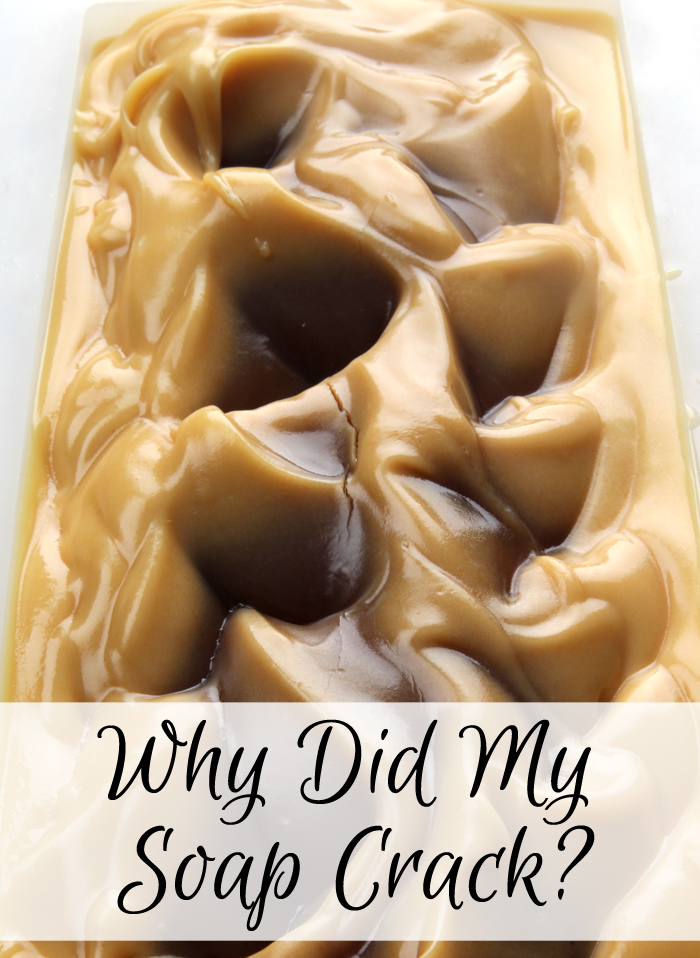
Adding ingredients to soap that contain sugar, such as purees, honey or milk, promote gel phase. In the photo above, honey was added to the soap at trace. The honey caused the soap to go through gel phase and crack in the center. Learn more about adding honey to your cold process soap here. If you add ingredients with extra sugar such as honey, place the soap in the fridge or freezer directly after pouring for 5-24 hours to help prevent gel phase and cracking.
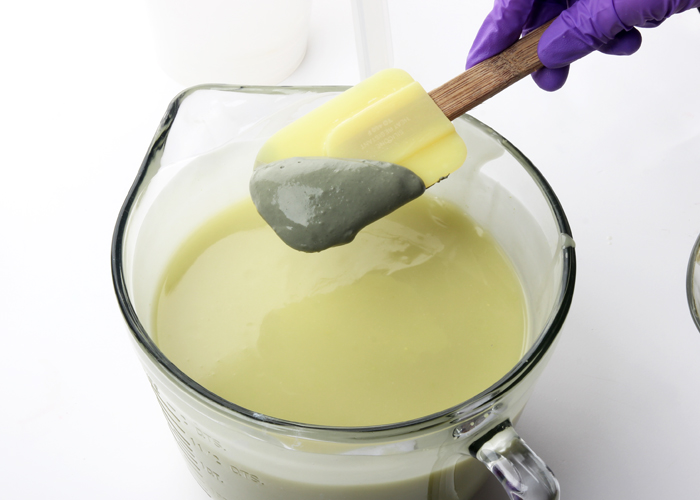
Dry IngredientsSoap can also crack if it contains ingredients that absorb moisture, such as clay. To compensate for the moisture clays absorb, I recommend dispersing them in distilled water. I usually use a dispersion rate of 1 tsp. clay to 1 Tbs. distilled water. While clays are the most common culprit for cracking, adding too much of any dry ingredients can contribute to cracks. For example, if you were to add lots of colloidal oatmeal, activated charcoal or arrowroot powder without additional water or oil, it may cause the soap to become dry and brittle.
To prevent clays from drying out your soap, disperse them in distilled water. Above, dispersed French green clay is added to soap batter in the Avocado + Spearmint Cold Process Tutorial.
If you experienced a crack in your soap, don’t get discouraged! While it’s not ideal from an aesthetic standpoint, the soap is still safe to use. Just check the pH of the soap to make sure it’s not lye heavy. About 9 times out of 10, a crack is due to heat. Next time, soap a little cooler or place your soap in the fridge or freezer. In my experience, I’ve found cracks are rarely noticeable once the bars are cut! =)
三重滋潤洗顏皂 Three Butters Soap
2018年4月27日 星期五
德國酸菜捲
- 高粉:200g
- 奶粉:4g
- 酵母粉:2g
- 糖:16g
- 鹽:1/2t
- 冰水+蝶豆花水:135g
- 奶油:20g
- Trader Joe's:Bagel Sesame 加入麵糰一起攪拌。
- 德國酸菜罐頭:瀝乾擦乾水份,加入橄欖油,加入額外的 Bagel Sesame,攪拌均勻。
- 第一次發酵完成後,鬆弛15分鐘,桿平,鋪上材料 9,捲起,切成六等分,放入紙模,第二次發酵約分30鐘。
Miele 6260 層一,200 度C,23 分鐘
楓糖巧克力捲
- 高粉:200g
- 奶粉:4g
- 酵母粉:2g
- 糖:16g
- 鹽:1/4t
- 蝶豆花茶:135g
- 奶油:20g
- 楓糖
- 巧克力豆
- 第一次發酵完成後,鬆弛15分鐘,桿平,塗上一層楓糖漿,撒上巧克力豆和赤崁糖,捲起,切成六等分,放入圓模,第二次發酵約45分鐘。
Miele 6260 層二,200 度C,23 分鐘
竹炭洗顏皂 Charcoal Facial Soap
2018年4月26日 星期四
熱製皂之當歸何首烏洗髮皂 HP Chinese Herbs Shampoo Bar
![]() |
|
訂閱:
文章 (Atom)
Monet to Matisse: Defying Tradition_Publ.p54
Frederick Frary Fursman 弗雷德里克・弗雷里・弗斯曼 In the Garden《花園裡》 1909,Chicago, Illinois 芝加哥,伊利諾州 oil on canvas|油彩、畫布 81.0 × 65.5 cm ___________...
-
⭐ 怎麼看出 bulk fermentation(第一次發酵) 可以再少一些? 根據 成品,有 三個訊號判斷: 1️⃣ 外觀:側邊略微「向外開」而不是往上挺 代表: 整形張力有建立 但麵糰已經發展到接近飽和 烘烤前的最後發酵只需要一點點就會到頂 👉 這通常是 bulk 偏滿(...
-
🍞 佛卡夏基本比例(以麵粉 100% 為基準) 材料 百分比( baker’s % ) 高筋麵粉(或中筋也可) 100% 水 70% (偏濕潤、孔洞較大) 鹽 2% 速發酵母 0.5–1% ...