For my reference:
Highly recommend this: CRAFTSAM | How to Make Translucent Soap
1. cook till soap batter is thick
2. add glycerin and ethanol, mix well without heating
3. cover with plastic wrap firmly, heat on and shake, till everything melted
4. stop heating, uncover, hot water, sugar, sitr
5. dye & mica
6. in mold
Homemade Glycerin Soap Recipe (From Scratch)
How to Make Clear Soap Base From Scratch
2018年5月29日 星期二

Glycerin Soap III w/ Shea Butter
Try to add shea butter in the recipe. The whole process took me about 4 hours. It looked better before adding sugar water. Need to modify the recipe and some procedures. However, it felt good after washing with this glycerin soap.


 |
|
2018年5月28日 星期一
My First Liquid Soap (Shampoo) 洗髮精初體驗
How to make liquid soap (作法請參考):https://www.youtube.com/watch?v=_TpYqYDU5vU

 |
|
2018年5月27日 星期日
Glycerin Soap II


 |
|
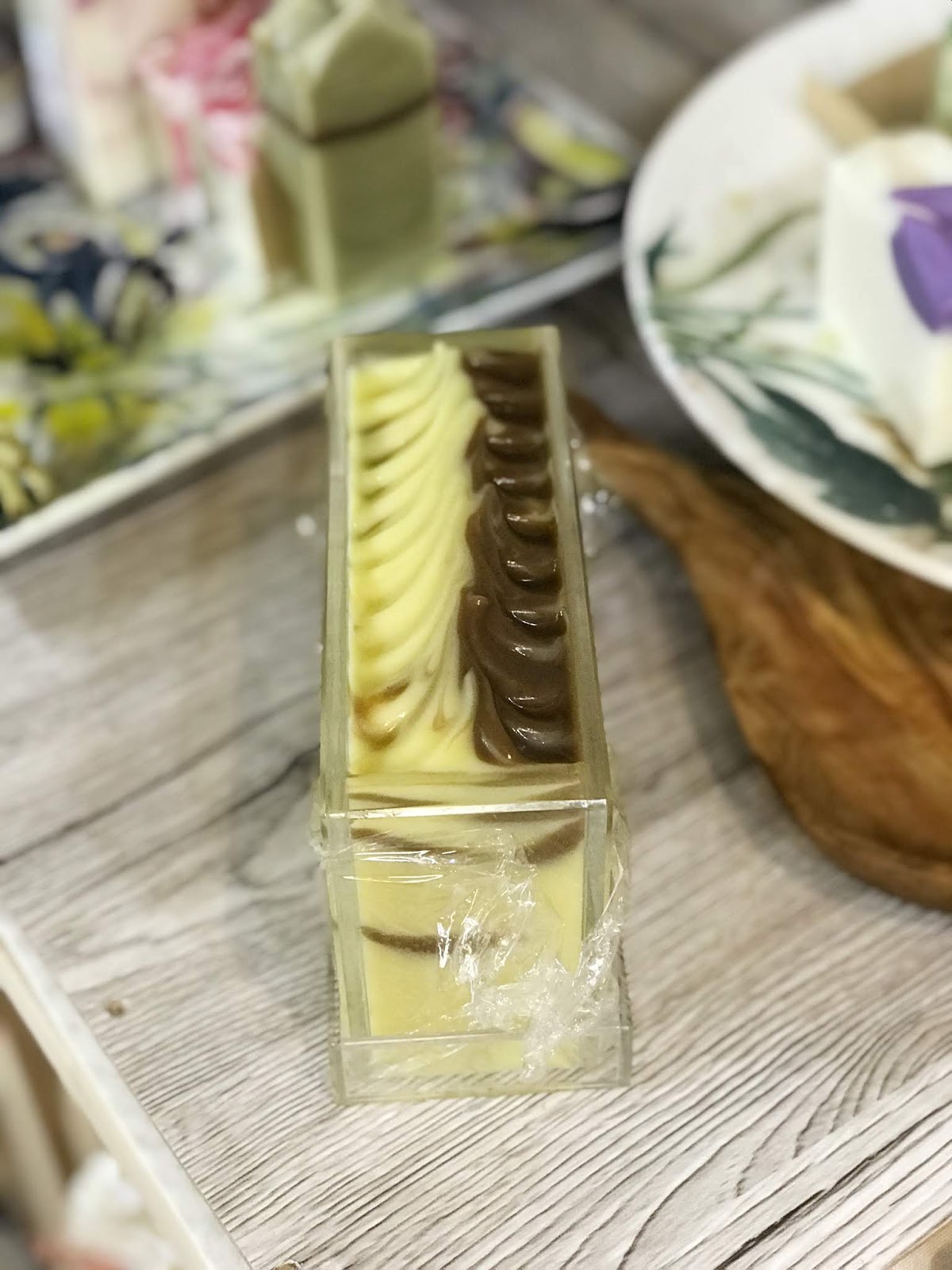
My First Glycerin Soap
 |
| Not transparent at all, need to adjust the recipe. |

 |
|
- not transparent
- cooked for 2.5hrs



2018年5月26日 星期六
All About Butters in Bath & Beauty Products (www.soapqueen.com)
For my reference.
The following information is from
https://www.soapqueen.com/bath-and-body-tutorials/tips-and-tricks/all-about-butters-in-bath-beauty-products/
Rich, creamy and decadent, butters are a great addition to a wide variety of projects. They can be used in cold process soap, lip balms, body butters and more. They are solid at room temperature, and have varying textures. If you’re wondering what butter is right for your project, read more about mango, cocoa, coffee, shea and avocado butter below. Keep in mind that choosing a butter depends a lot on personal preference, and how you’d like your finished product to feel.
The following information is from
https://www.soapqueen.com/bath-and-body-tutorials/tips-and-tricks/all-about-butters-in-bath-beauty-products/
All About Butters in Bath & Beauty Products
Rich, creamy and decadent, butters are a great addition to a wide variety of projects. They can be used in cold process soap, lip balms, body butters and more. They are solid at room temperature, and have varying textures. If you’re wondering what butter is right for your project, read more about mango, cocoa, coffee, shea and avocado butter below. Keep in mind that choosing a butter depends a lot on personal preference, and how you’d like your finished product to feel.
Before we look at the different kinds of butters, let’s talk about what butters have in common. Butters come from various natural sources, such as fruit trees and kernels. Some butters, such as coffee butter, are a blend of hydrogenated oils. Hydrogenation is the process of adding hydrogen to liquid oils to turn them into a solid. In general, butters are extremely skin loving and add a luxurious feel to products. In cold process soap, butters can contribute to the firmness of the bar. But, using too much butter can inhibit lather, or cause the soap to crack. In general, I like to use butters around 10%-15% or less in my recipes. To read more about various soap making oils and butters, click here.
Some butters are soft and spreadable, while others are hard and brittle. In my opinion, the softest butters are avocado butter and coffee butter. They are soft, spreadable and melt on contact with the skin. Shea butter is slightly firmer, but still soft and spreadable. The two harder butters are mango butter and cocoa butter. Both are more brittle, and need to be chopped rather than scooped. Cocoa butter is much firmer than mango, and is great for adding firmness to cold process soap. Do you have a favorite butter?
Avocado butter has a very soft and spreadable consistency. It’s manufactured from the fruit of the avocado tree, which normally grows in sub-tropical regions. Avocado butter is solid at room temperature, but melts when it comes in contact with skin. Its smooth texture and low melting point makes it easy to spread and whip, making it a great option for soft balms and whipped body butters.
In cold process soap, I recommend using avocado butter up to 12.5% of your recipe (though I tend to use it at more of a 3-5% rate max). Avocado butter will contribute slightly to the firmness of the final bar of soap, but because it’s not an extremely firm butter it does not firm the soap like coconut oil, palm oil, wax or cocoa butter. It also isn’t going to contribute much to lather which is why my preference is to use it at a lower usage rate. It has a shelf life of about 3 years. Check out the recipes below that contain avocado butter for project ideas!
Cocoa Butter (Cocoa Butter Chunks, Cocoa Butter Pastilles & Deodorized Cocoa Butter)
Cocoa butter is a vegetable fat with a creamy, chocolatey scent. It has a firm and hard texture and can be used to harden soap, lip balm, body butters and more. Cocoa butter has a melting point of approximately 95.0–97.7 °F, and a shelf life of about 1 to 2 years. At room temperature, cocoa butter is extremely hard and brittle, similar to a wax texture. It does not melt on contact with the skin.
Naturally, cocoa butter has a rich aroma, but a majority of this can be removed via steam. This process results in deodorized cocoa butter, which has a lighter smell and color. I love using cocoa butter in my cold process soap when I want to add firmness in addition to skin-loving properties. In particular, it’s a great choice when you’re making a palm-free recipe. It does not contribute much to lather so I recommend using cocoa butter around 15% or less in your cold process recipes. A higher percentage can cause the soap to crack, or feel brittle or waxy. It’s also great when formulating a firm lip product or balm.
Due to its fatty acid profile, it’s best to temper cocoa butter to avoid crystallization when making anything but soap. When the fats in cocoa butter melt and solidify at different temperatures, the fatty acids can from large clumps. This leads the final product to feel grainy. Click here to read more about tempering your butters. Check out the tutorials below featuring cocoa butter.
Coffee butter is a soft and smooth butter. It is similar in texture to avocado butter. It has a soft brown color and a rich coffee scent. It’s a blend of hydrogenated vegetable oil and coffee seed oil. It naturally contains .5%-1% caffeine. Coffee butter has a melting point of about 104° F.
Because it’s nice and soft, it’s great for whipped butters. When using coffee butter in your skin care recipes, keep in mind that the natural smell will end up in the final product. If you love all things coffee, this is good news! I used coffee butter in both the Coffee Butter Foot Creme and and the Whipped Coffee Butter Tutorial. The butter adds a soft scent in these recipes, and contributes to a soft and smooth texture. I love the whipped texture of coffee butter so much, I also used it in the Pumpkin Spice Latte Sugar Scrub Soap Queen TV video below.
In cold process soap, I recommend using coffee butter around 3-6% of your recipe. Because of its soft texture, it does not add very much firmness or lathering properties to your recipe. Instead, it adds skin-loving conditioning properties. Coffee butter has a shelf life of about about 1 year.
Mango butter has a firmer texture than shea, avocado and coffee butters, but is softer than cocoa butter. It is extracted from the fruit kernels of the mango tree, and begins to melt upon contact with the skin. Most mango butter on the market is refined and deodorized to remove scent and color. It has a melting point of about 86° F, and a shelf life of about 1 year.
The medium texture (not too soft, not too hard) makes it a go-to choice for many crafters. In soap, I recommend using it at 15% or less of the total oils in your cold process recipe. When too much is used, it can cause the soap to crack or become brittle. Mango butter contributes a small amount of firmness to soap, but not nearly as much as cocoa butter.
Due to the slightly firm texture of mango butter, I prefer to add it to products in melted form. It’s not the best butter choice if you’d like to whip the butter; I recommend melting it first and whipping it as it cools. Check out the recipes below for mango butter ideas!
Last but certainly not least is shea butter. Shea butter is obtained by cold pressing the seeds of the karite tree. The shea butter found at Bramble Berry is ultra-refined for a neutral smell and pale color. Shea butter has a softer texture than cocoa and mango butter, but is slightly firmer than avocado and coffee butter. It has a shelf life of about 1 year, and a melting point of about 90° F.
This skin-loving butter is usually used at 15% or less of the total oils in your cold process recipes. It contributes a bit to bar hardness and conditioning properties but does not help with lather. The soft texture makes it great for creating whipped body butters, as shown in the Easy Whipped Shea Butter. It’s also fantastic in lotion and lotion bars.
左手香皂 Patchouli Soap


 |
|
2018年5月25日 星期五
熱製法咖啡薄荷皂 HP Mint and Coffee Soap


 |
|
訂閱:
文章 (Atom)
Monet to Matisse: Defying Tradition_Publ.p52
卡米耶・畢沙羅 Camille Pissarro 1830 年生於美屬維京群島夏洛特阿馬利亞 1903 年卒於巴黎 Prairie à Éragny 《埃拉尼的草地》 1886,法國埃拉尼 油彩、畫布 導覽牌翻譯: 卡米耶・畢沙羅 Camille Pissarro 1830...

-
 ⭐ 怎麼看出 bulk fermentation(第一次發酵) 可以再少一些? 根據 成品,有 三個訊號判斷: 1️⃣ 外觀:側邊略微「向外開」而不是往上挺 代表: 整形張力有建立 但麵糰已經發展到接近飽和 烘烤前的最後發酵只需要一點點就會到頂 👉 這通常是 bulk 偏滿(...
 -
 🍞 佛卡夏基本比例(以麵粉 100% 為基準) 材料 百分比( baker’s % ) 高筋麵粉(或中筋也可) 100% 水 70% (偏濕潤、孔洞較大) 鹽 2% 速發酵母 0.5–1% ...