以下文章取自:https://www.soapqueen.com/bath-and-body-tutorials/tips-and-tricks/adding-honey-to-cold-process-soap-tips-tricks-recipe/
{Adding Honey to Cold Process Soap: Tips, Tricks & Recipe}
There are a wide variety of ingredients to customize handmade soap. Oils, colorants, additives and fragrances create a perfectly customized bar. Honey is a popular additive for cold process soap. It has various properties that make it appealing for skincare. In particular, honey is a natural humectant, which means it absorbs moisture from the air. Humectants are great for the skin, as they can help the skin retain moisture. Honey also contains antioxidants and natural sugars which can increase the lather of cold process soap.
While honey has some great benefits for soap and skincare, it can be tricky to work with. Adding honey to cold process soap means you are adding extra sugar. Sugar causes cold process soap to heat up. This also happens when using ingredients such as milk, fruit juices and purees, which also contain natural sugars. When soap heats up after poured into the mold, the soap goes through gel phase. ‘Gelling’ and ‘gel phasing’ in cold process soap refers to a part of the saponification (soapmaking) process where the soap gets warm and gelatinous – up to 180 degrees (around 63 C). Click here to read more about gel phase.
In many cases, gel phase is a good thing! It can result in brighter colors, and give the soap a shinier appearance. But when you’re working with a soap that contains extra sugar such as honey, you may want to avoid gel phase. The extra sugar can lead to an extremely hot gel phase. The hot gel phase can produce cracked soap and a kind of caramelization, which leads to a deep color within the soap. If this happens, the soap is still perfectly fine to use, but it may not be the color you want. In some cases, sugar combined with extreme heat can even lead to a soap volcano. Check out the volcano that occurred when I made soap using coconut milk.
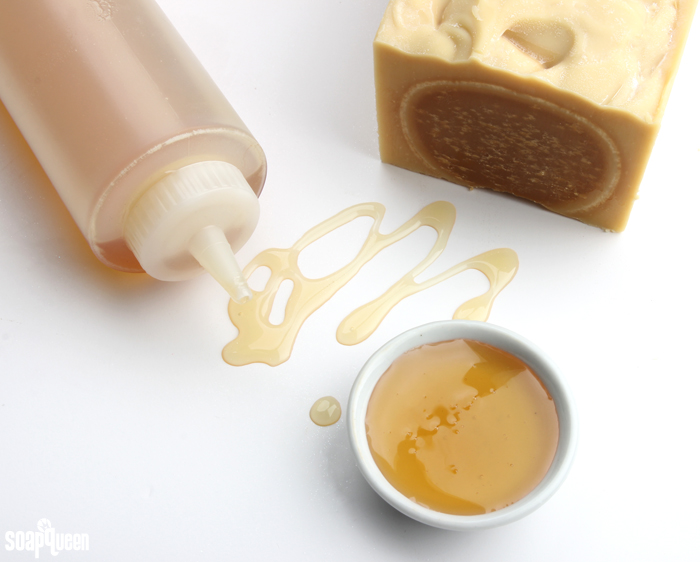
In general, use about 1 teaspoon of honey per pound of soap. You can certainly use more, but keep in mind the more honey you use, the hotter your soap will get. Some soapers add their honey to the soap directly during trace. Others prefer to dilute the honey in a portion of the water in their recipe, and add this mixture at trace. If you’ve never worked with honey in cold process soap before, I recommend keeping your design very simple, as the honey can cause the soap to accelerate and thicken quickly. This can make swirl and complicated designs very difficult.
When working with honey in cold process soap, I recommend keeping temperatures cool. This will help prevent the soap from scorching and caramelizing the honey. Most soapers work with their lye and oils around 100-120° F. When adding honey to my recipe, I like to soap on the cooler side, around 100° F. The more honey you add to the soap, the cooler your soaping temperatures should be. Then, to help prevent the soap from going through gel phase, place the freshly poured soap immediately into the fridge or freezer for at least 3 hours, up to overnight. Sometimes the fridge is not cool enough to prevent gel phase, so a freezer is a better option.
To demonstrate the effects of honey in cold process soap, I made a basic batch and split it into two molds. One mold went into the freezer, while the other soap stayed on the counter at room temperature. In order to really drive my point home, I used 2 teaspoons of honey per pound of cold process soap. This is more honey than I recommend. The large amount of honey in this soap caused it to really heat up! On the left is the soap left on the counter, while the soap on the right was placed in the freezer. The soap left at room temperature became extremely hot. The honey soap that went into the freezer also got quite warm, and went through a partial gel phase. Scroll down to see the process by which these bars were made, and more photos of the end results.
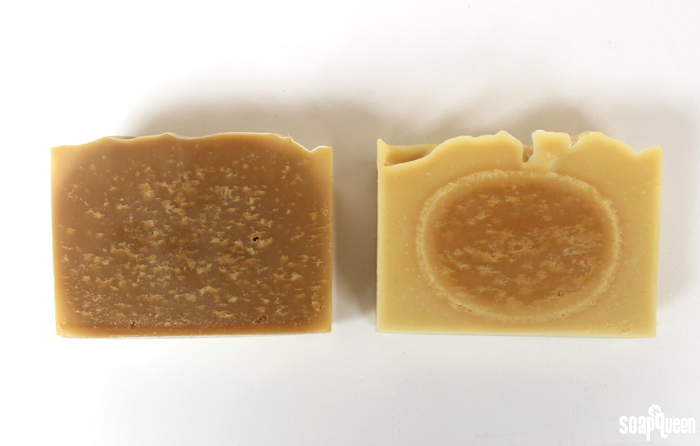 On the left, the soap was left at room temperature. On the right, the soap was placed in the freezer. Because so much honey was used, both soaps experienced gel phase!
Note: The recipe below creates about 6.5 pounds of soap, which was poured into two 10″ Silicone Loaf Molds. If you’d like to replicate this recipe for one mold, use the Lye Calculator to resize the batch.
If you’ve never made Cold Process soap before, stop here! I highly recommend checking out our FREE four part
SoapQueen.tv series on Cold Process Soapmaking, especially the episode on
lye safety. And if you’d rather do some reading, Bramble Berry carries a wide range of
books on the topic, including my newest book,
Soap Crafting. You can also checkout the
digital downloads for that instant gratification factor.
SAFETY FIRST: Suit up for safe handling practices! That means goggles, gloves and long sleeves. Make sure kids, pets, and other distractions and tripping hazards are out of the house or don’t have access to your soaping space. Always soap in a well-ventilated area.
FRAGRANCE PREP: Add 2 oz. Pure Honey Fragrance Oil and 2 oz. Sweet Meyer Lemon Fragrance Oil in a fragrance safe, glass container. Stir gently and set aside until ready to use.
COLOR PREP: Disperse 1 teaspoon of yellow oxide into 1 tablespoon of lightweight liquid oil like
sweet almond or
sunflower oil. Then in a separate container, disperse 1 teaspoon of Fizzy Lemonade Colorant into 1 tablespoon lightweight liquid oil. Use a mini mixer to disperse any clumps.
ONE: Slowly and carefully add the lye to the water and gently stir until the lye has fully dissolved and the liquid is clear. Set aside to cool.
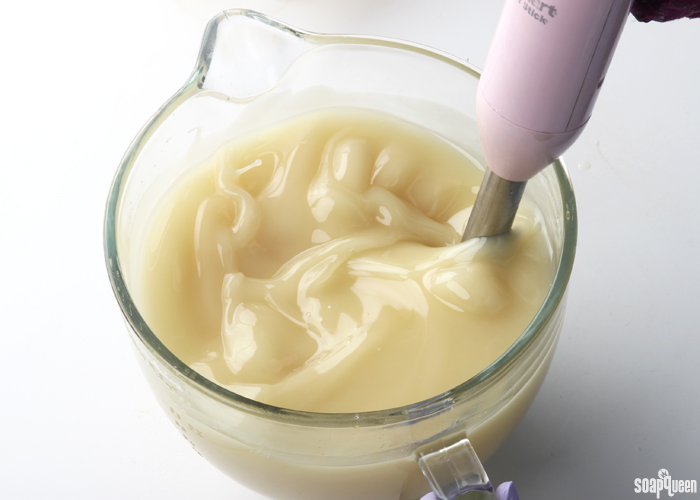
TWO: Thoroughly melt the Lots of Lather Quick Mix (remember to fully melt then mix your entire container portioning). Once the lye water and the oils have cooled to about 100-110 degrees (and are ideally within 10 degrees of each other), add the lye water to the oils and stick blend until thin trace. If you’d like a harder bar of soap that releases faster from the mold, you can add sodium lactate to the cooled lye water. Use 1 teaspoon of sodium lactate per pound of oils in the recipe. For this recipe, you’d add about 4 teaspoons sodium lactate.
 THREE:
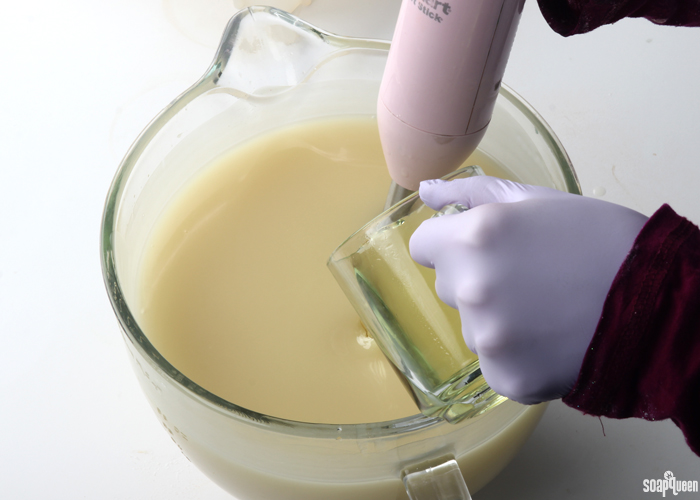
 Once the batter has reached a light trace, add the fragrance blend and stick blend for several seconds to combine.
 FOUR:
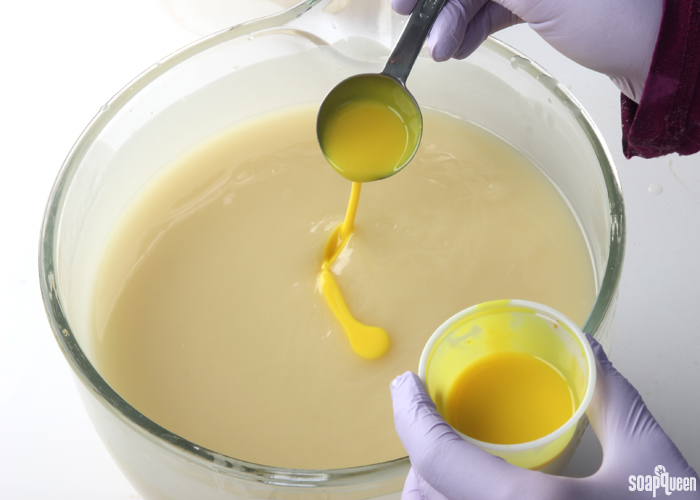
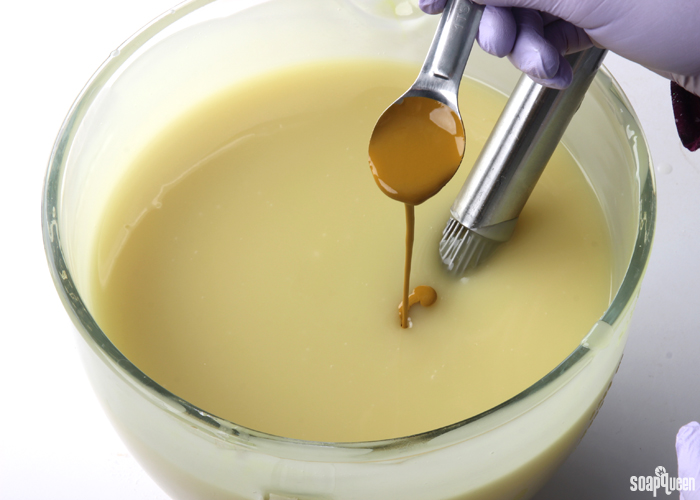
FOUR: Add 1 tablespoon dispersed Fizzy Lemonade Colorant and 1 teaspoon dispersed Yellow Oxide and use a whisk or stick blender to mix in the colorants.
 FIVE:
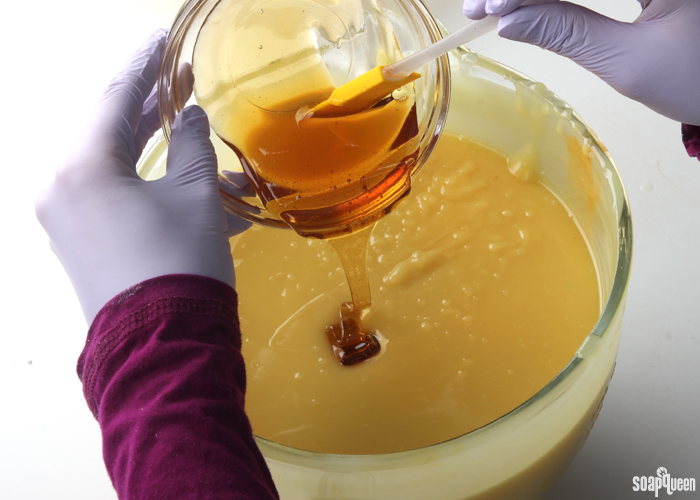
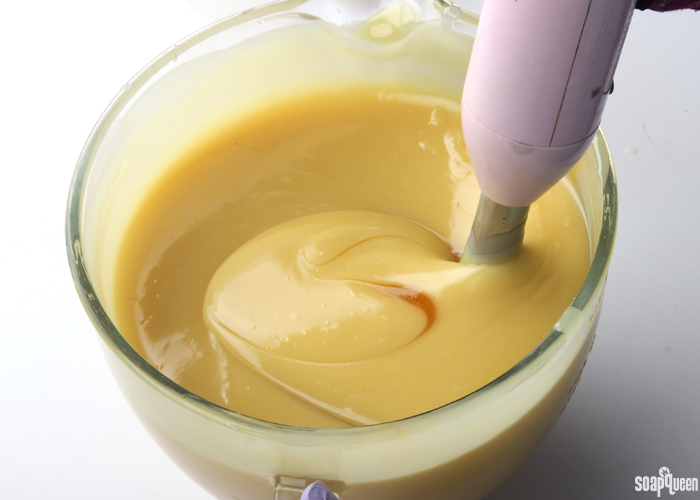
FIVE: Add the honey to the soap batter, and use the stick blender to incorporate the soap into the batter.
 SIX:
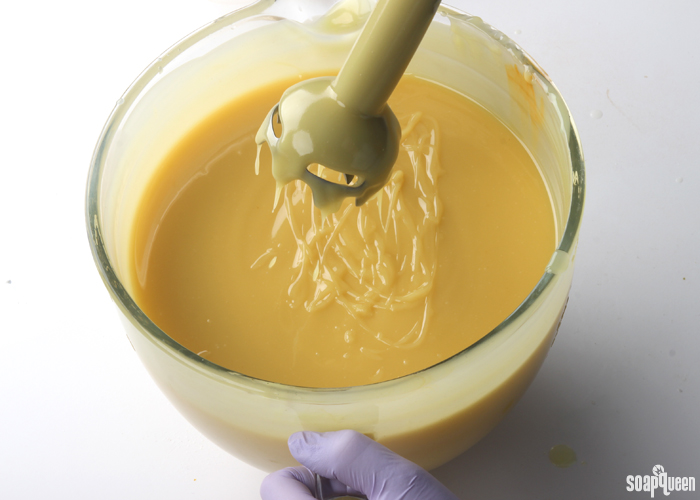
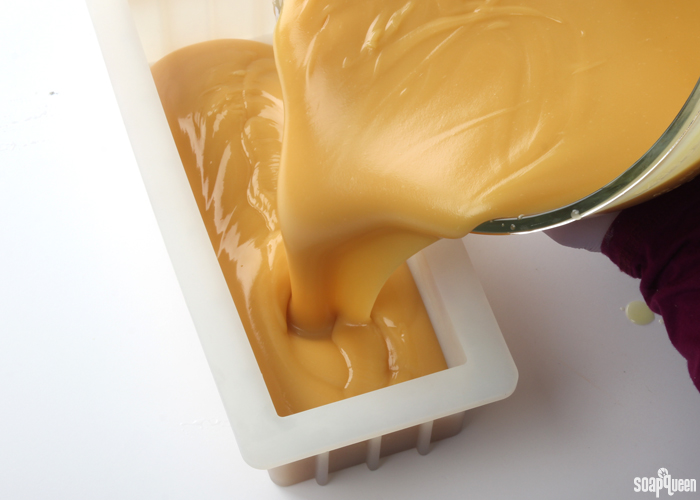
SIX: Once the soap has reached a nice thick trace, pour the soap into the molds. Remember, this recipe made two batches of soap. =)
 SEVEN:
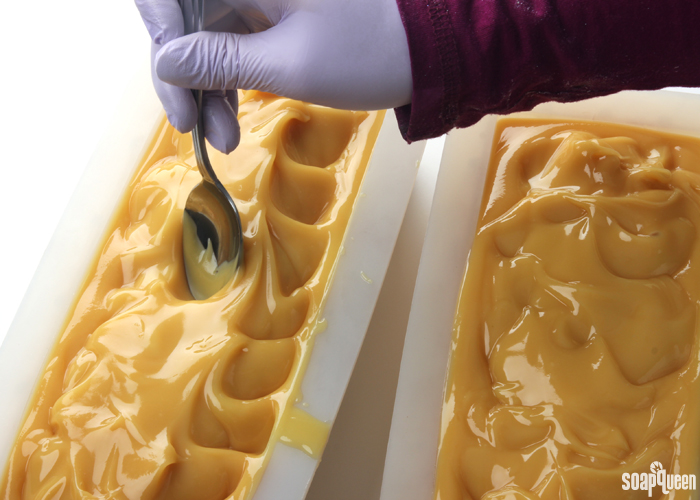
 Use a spoon to create a nice textured top. Spritz the top of the soap with
99% isopropyl alcohol to prevent soda ash. One of the soaps went into the freezer, while the other sat out on the counter at room temperature.
 After about 30 minutes to an hour, the loaf of soap left on the counter began to go through an extremely hot gel phase.
 The entire loaf started to caramelize due to the honey content, and the color started to deepen. The center of the soap is the most insulated and the warmest area of gel phase. Check out that dark brown color!
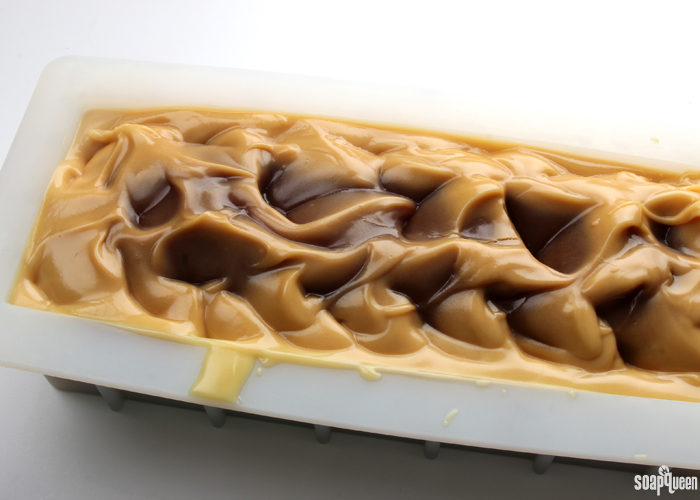 Check out that awesome gel phase in the center of this soap! The extra sugar from the honey increases the temperature of cold process soap.
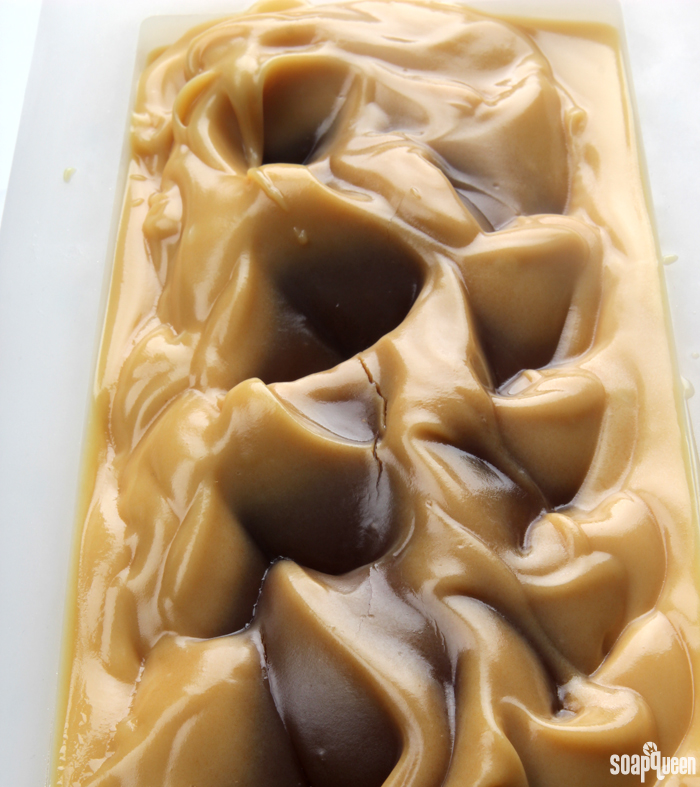
In addition, you can see that the soap is becoming so hot that the top is cracking. Cracks in soap does not affect the quality, but is an aesthetic issue. Cracking means that due to the heat, the soap is expanding.
The other loaf of soap was left in the freezer overnight. Once removed, it was still a nice creamy color and texture.
But once it was unmolded, I noticed on the bottom that the center of the soap still went through gel phase, despite being in the cold freezer. It just goes to show the power of extra sugar in cold process soap! If I had used less honey, this soap most likely would have not gone through gel phase. In addition, soaping with cooler temperatures will prevent this.
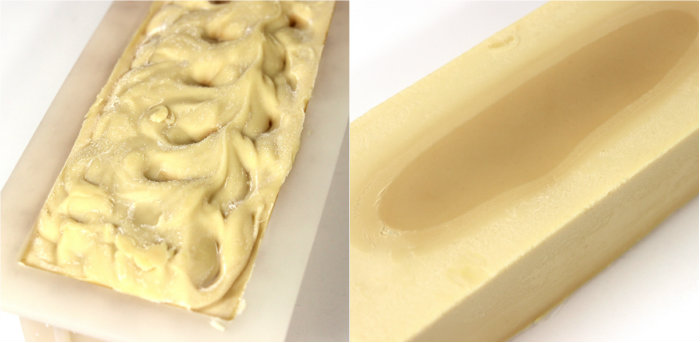 The soap that was placed in the freezer still went through a partial gel phase.
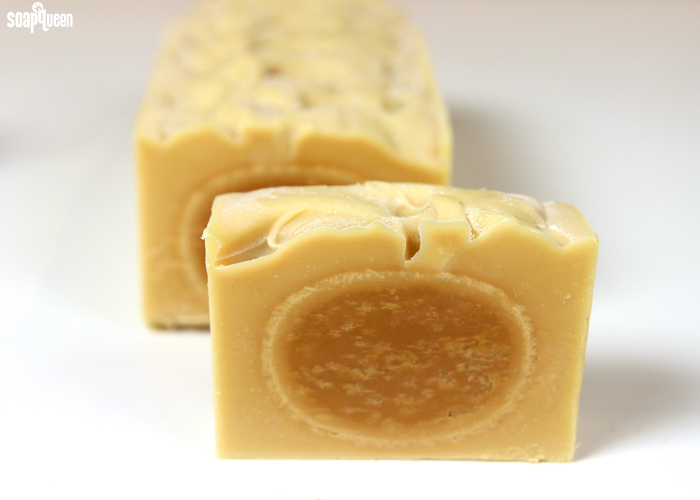
It’s so interesting to see the difference between the two bars.
Clearly, the sugar in both bars caused them to become quite hot. The soap that went into the freezer (shown on the right, below) became hot in the center, where the soap was insulated. The soap that was closer to the outside of the mold stayed cool due to the temperature of the freezer. It’s crazy that a freezer was not able to fully prevent gel phase! If less honey was used, the soap may not have gone through gel phase at all. In addition, soaping with cooler temperatures may have prevented the partial gel phase.
On the left, the soap was left at room temperature. On the right, the soap was placed in the freezer.
Even more interesting, you can see smell specks throughout the bar on the left, and inside the gelled portion of the soap that was placed into the freezer. Both soaps have been pH tested, and are not lye heavy. In addition, these bars have been used without irritation, so the specks are not lye pockets or crystals. Though I have theories, I’m not 100% sure what these specks are caused from, but it’s clear heat is playing a role. Interestingly, the small specks do not occur in the areas where the soap (on the right) did not go through gel phase. The specks only appear in the gelled portion of the soap. There is also a very clear cluster of white spots all around the gelled center.
One theory is these specks are palm stearic acid. The Lots of Lather Quick Mix contains palm oil, which is made up of several different kinds of fatty acids. One of these is stearic acid, which solidifies at a different temperature. Stearic acid is why it’s so important to always thoroughly melt your entire container of palm oil; the stearic acid tends to sink and solidify first as the liquid oil cools. This means the stearic acid is unevenly distributed throughout the palm oil container. The specks only seem to occur in the areas where the soap became extremely hot. In particular, the ring of white specks in the soap that was placed in the freezer suggests the stearic acid cooled quickly in this area and clustered together.
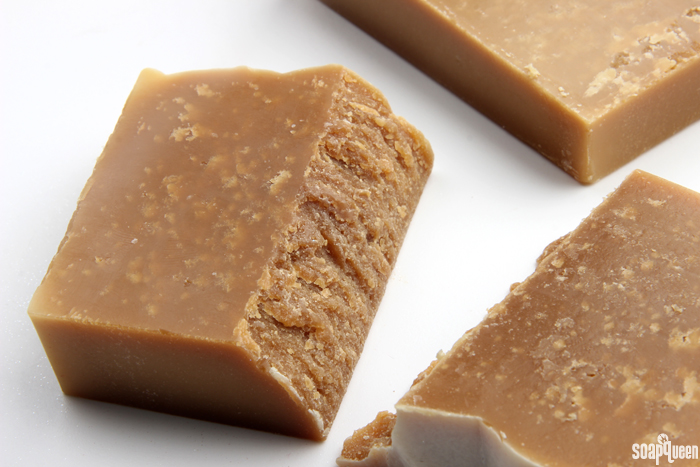
Another theory is these specks are the sugars in the honey crystallizing. It’s hard to see in the photos, but the soap that was left at room temperature and became very hot has a glossy, shiny texture. When you think about how sugar and honey behaves, it makes sense that when it becomes very hot, it forms a type of crystal…like a rock candy! The overall texture of the soap is extremely brittle and rather crumbly. Most of the bars crumbled as they were cut. Usually, crumbly bars hint at lye heaviness, but these bars are perfectly balanced. Below, you can see the unique texture inside the bars. My big take away from this experiment was 2 teaspoons honey per pound of soap is way too much. =) Another theory is that the heat may have also caused the soap to expand on the inside, and the small dots are mini heat tunnels.
Check out this crazy heat tunnel I experienced several years ago!


 On the left, the soap was left at room temperature. On the right, the soap was placed in the freezer. Because so much honey was used, both soaps experienced gel phase!
 THREE: Once the batter has reached a light trace, add the fragrance blend and stick blend for several seconds to combine.
 FOUR: Add 1 tablespoon dispersed Fizzy Lemonade Colorant and 1 teaspoon dispersed Yellow Oxide and use a whisk or stick blender to mix in the colorants.
 FIVE: Add the honey to the soap batter, and use the stick blender to incorporate the soap into the batter.
 SIX: Once the soap has reached a nice thick trace, pour the soap into the molds. Remember, this recipe made two batches of soap. =)
 SEVEN: Use a spoon to create a nice textured top. Spritz the top of the soap with 99% isopropyl alcohol to prevent soda ash. One of the soaps went into the freezer, while the other sat out on the counter at room temperature.
 After about 30 minutes to an hour, the loaf of soap left on the counter began to go through an extremely hot gel phase. The entire loaf started to caramelize due to the honey content, and the color started to deepen. The center of the soap is the most insulated and the warmest area of gel phase. Check out that dark brown color!
 Check out that awesome gel phase in the center of this soap! The extra sugar from the honey increases the temperature of cold process soap.
 The other loaf of soap was left in the freezer overnight. Once removed, it was still a nice creamy color and texture. But once it was unmolded, I noticed on the bottom that the center of the soap still went through gel phase, despite being in the cold freezer. It just goes to show the power of extra sugar in cold process soap! If I had used less honey, this soap most likely would have not gone through gel phase. In addition, soaping with cooler temperatures will prevent this.
 It’s so interesting to see the difference between the two bars. Clearly, the sugar in both bars caused them to become quite hot. The soap that went into the freezer (shown on the right, below) became hot in the center, where the soap was insulated. The soap that was closer to the outside of the mold stayed cool due to the temperature of the freezer. It’s crazy that a freezer was not able to fully prevent gel phase! If less honey was used, the soap may not have gone through gel phase at all. In addition, soaping with cooler temperatures may have prevented the partial gel phase.